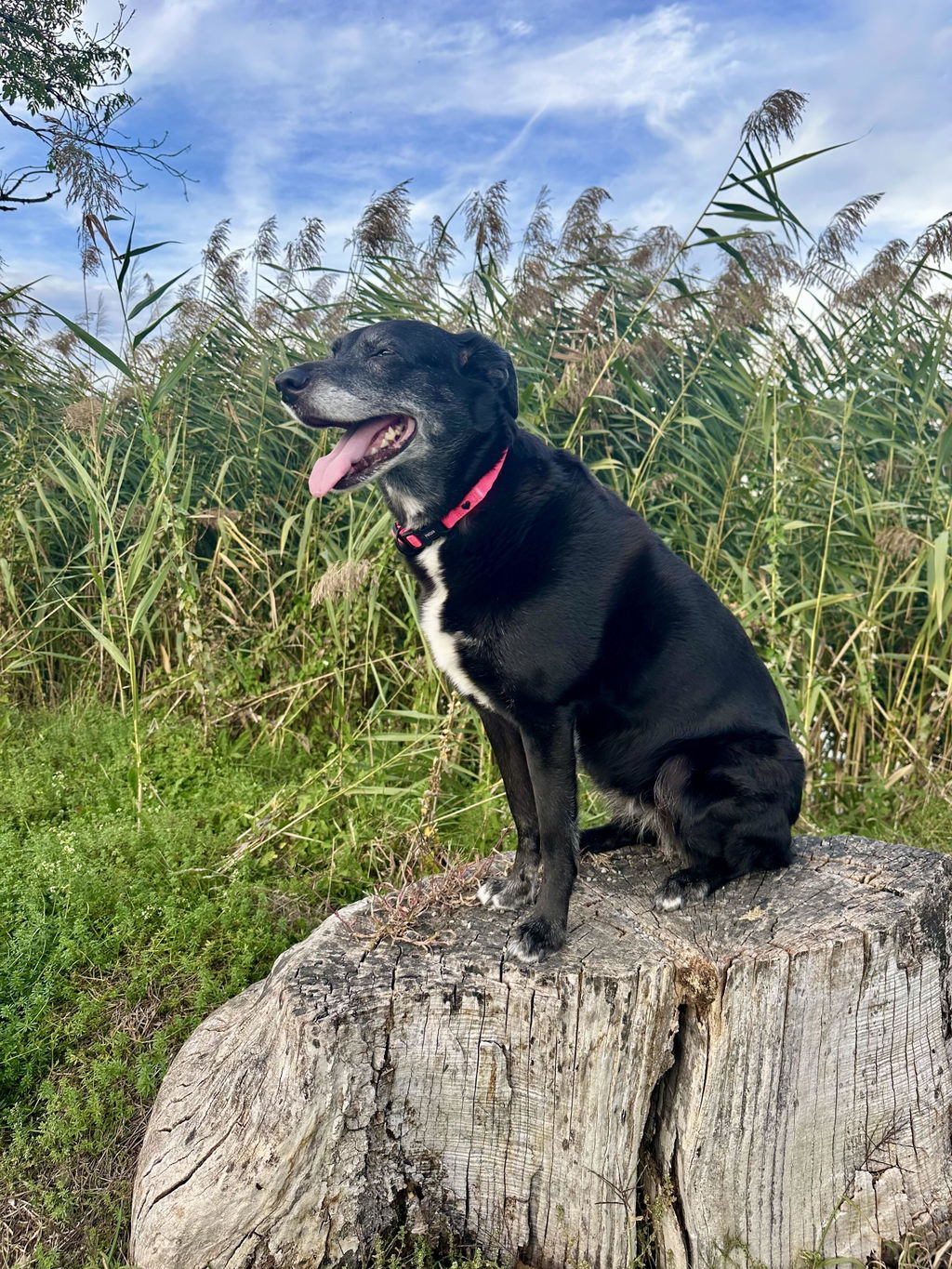
Who says that only we humans can enjoy Easter? For dogs, Easter is practically made to order, as they are born sniffers.
In this post, we will show you how to make Easter a very special event for your dog.
Easter egg hunts for dogs
You read that right: dogs can also hunt for Easter eggs, just like we did as children.
There are only two differences:
- First, the Easter eggs, nests, and gifts we two-legged friends receive are not suitable for dogs. For your furry friend, you need safe, dog-friendly Easter gifts.
- Second, while we rely on our eyes when searching, dogs search primarily with their noses.
Why dogs can smell so well

You probably know that dogs have an excellent sense of smell. But did you also know that they have up to 300 million olfactory cells? For comparison, we humans have only 5 million.
Furthermore, dogs' nostrils are shaped differently, featuring side slits, and their olfactory mucosa is up to 200 square centimeters in size. This allows them to perceive even the finest scent molecules.
When sniffing, dogs inhale and exhale in short bursts – up to 300 times per minute. In the process, their nostrils smell in two different directions. This allows them not only to pick up distant scents better but also to determine which direction they are coming from.
For the wild ancestors of our dogs, this amazing sense of smell helped them track down food and thus survive. Our domestic dogs no longer need to do this – after all, they simply have their food served to them. However, the sense of smell still wants to be used and challenged, because it is part of a dog's natural essence.
While some dogs use their sense of smell as police, hunting, or rescue dogs, most only have the opportunity to do so while playing or going for walks.
Easter is therefore a perfect opportunity for dogs to enjoy double the fun: with a game for their sniffer and great gifts.
Dog-friendly Easter gifts

The Easter egg hunt for dogs should be well prepared so that your four-legged friend can participate safely and with joy. The most important thing is the gifts. Depending on how fit your dog is and how familiar they are with scent games, you will need one or more gifts to hide.
Ideal options are healthy treats, as their delicious scent lures even untrained sniffers onto the right track.
Attention: Chocolate and other sweets, raisins, nuts, cookies, and cakes are dangerous for dogs and are therefore unsuitable for an Easter egg hunt.
To add more variety, you can hide dog toys. Be sure to check that they are made of safe materials, do not splinter, and have no small parts that can come loose. For your dog to find them, you should either use scented toys or place a treat next to every toy.
You are probably wondering now if dogs are allowed to eat hard-boiled eggs – yes, they can, but only in small quantities. If your dog likes eggs, there is nothing to stop you from giving them a real Easter egg.
But be careful: for dogs, Easter eggs must not be dyed or decorated in any other way.
"Easter nests" for dogs

For Easter nests, you can use things like fabric bags, boxes, or sturdy baskets, each containing a treat and/or a toy.
It is important that you only use packaging that is safe for dogs. Therefore, avoid Easter grass and other decorations. In addition, the packaging must be made of breathable material or have openings so your dog can sniff out the gifts.
There are also special Easter eggs for dogs that you can fill. These are made of robust, non-toxic material and have small holes. The disadvantage is that your dog cannot open these eggs themselves. If you choose these, make sure when buying that the eggs are undamaged and of high quality.
The right hiding places for the dog Easter egg hunt
After you have chosen the gifts and packaging, think about the best place for your dog's Easter egg hunt.
A fenced-in garden or a secure area in the house is ideal so your four-legged friend doesn't accidentally run away. Remove potential sources of danger, such as sharp-edged or fragile objects, so your dog can search without risk at Easter.
The treats and toys should be hidden in places that are easily accessible to your dog, otherwise, they will become frustrated. This means the hiding places should only be on the floor or at most slightly above head height. Furthermore, they must be freely accessible without your dog having to squeeze through or contort themselves anywhere.
Ideal hiding places include, for example:
- under a pillow or blanket,
- in a sufficiently large gap behind a piece of furniture,
- inside a cardboard box,
- behind a bush or tree trunk,
- under leaves,
- behind a curtain or partition.
How to make the Easter egg hunt dog-friendly

Dogs have different temperaments, abilities, and levels of physical fitness, so it is important to adapt the Easter egg hunt to your dog's characteristics.
For dogs that are healthy, enjoy searching, and are easily motivated, you can hide the gifts in more difficult places.
If your dog is old, sick, or physically restricted, you should use only very simple hiding places on the floor. The same applies if they are easily frustrated or do not have much experience with search games yet.
If your dog is physically and mentally very fit, the normal Easter egg hunt might become boring for them. In that case, you can keep them entertained by combining the hunt with another game.
For example:
- Hide treats or toys in small boxes and get your dog to open them.
- When your dog finds a hiding place at Easter, have them "sit" or perform a trick before they are allowed to look for the next one.
- Combine a search and retrieve game: your dog must first bring you a found gift before they can keep it. This only works with toys, not treats – unless your four-legged friend has exceptionally good self-control.
Positive reinforcement and motivation

During the Easter egg hunt, your dog's motivation is crucial. Simply searching is no fun for them – and they will lose interest even faster if you put them under pressure. The magic word, as with any game and training, is "positive reinforcement".
It's very easy to do:
- Plan enough time for your dog at Easter and stay relaxed, even if it takes longer.
- Take part in the search by being attentive and encouraging your four-legged friend to search with a cheerful voice in between.
- Praise your dog as soon as they have found a hiding place and reward them. If the gift is a treat, they can of course eat it, which is their reward. If they have found a toy, take a break from searching and play with it for a moment. In addition, loving pats should always be part of the reward.
- If your dog is frustrated because they can't find anything, or they get tired, stop the Easter egg hunt and give them their gifts.
Important tip for Easter with multiple dogs

If you have several dogs, the Easter egg hunt can quickly turn into a competition. In this case, it is best to plan separate search rounds or hide enough gifts so that every dog has a fair chance. Make sure there is no food envy and that the search runs harmoniously.
Reward after the search
Although your dog has already received the treats and perhaps toys they found as rewards during the hunt, and has been extensively praised and petted by you, the celebration shouldn't end with the Easter egg hunt.
Rejoice together at the task accomplished – even if your dog didn't find all the hiding places, or perhaps even found none at all. Praise them extensively at the end and reward them with cuddles, a game, or a nice walk, depending on their energy levels.
Enjoy the rest of the holidays together and use the time for exciting or relaxing activities. Just as you surely prepare a feast for yourself and your loved ones, spoil your dog with extra delicious food at Easter too.
Conclusion
For us humans and our dogs, Easter is a great opportunity to celebrate and have fun together. With a dog-friendly Easter egg hunt, safe gifts, and lots of positive reinforcement, the day will become a true experience for your four-legged friend.
Remember to adapt the hunt to your dog's needs and create a relaxed atmosphere so they can enjoy the challenge. This will make Easter an unforgettable celebration full of joy and love for you both.